


02 Apr How to Identify Durable Travel Tote Bags That Last for Years
A good travel tote bag is one of the most useful things you can own. It carries your essentials on long flights, weekend getaways, and daily commutes. However, not every tote bag on the market is built to handle real travel demands. Some fall apart after a few trips. Others lose their shape or develop tears within months of regular use.
Finding a bag that truly lasts takes a little knowledge. When you know what to look for, you can make a smarter choice. This guide will help you identify the qualities that separate a lasting bag from one that disappoints.
Why Bag Durability Is Worth Your Attention
It is easy to underestimate how much wear a travel bag goes through. You pack it, unpack it, toss it in overhead compartments, drag it through airports, and set it down on all kinds of surfaces. Over time, this adds up.
A durable bag saves you money. You will not need to replace it every year or two. Additionally, a reliable bag keeps your belongings safe. A bag that holds together under pressure protects everything inside it. Therefore, spending a bit more for quality upfront almost always pays off.
Fabric and Material: The Foundation of Any Good Bag
The material of a tote bag is the single most important factor in its durability. Some fabrics hold up for decades. Others start to fray or fade within months.
Choosing the Right Fabric
Canvas is one of the most trusted materials for travel bags. It is thick, tough, and resistant to tearing. High-denier nylon is another excellent option. Denier refers to the thickness of the fiber. A higher denier number means a thicker, stronger fabric. Look for bags made with 600D or higher nylon for dependable performance.
Polyester is also widely used. It tends to be lightweight and resists moisture naturally. However, quality varies greatly between manufacturers. A thick, tightly woven polyester holds up well. A thin or loosely woven one does not.
Why Coatings Matter
Many quality travel bags feature a coated or laminated interior. This coating is what makes a bag water-resistant. A water-resistant tote can handle rain, spills, and wet surfaces without soaking through. This is especially important for travel, where you often have little control over your environment.
Look for bags where the coating is applied evenly and feels substantial. A thin or flaking coating is a sign of low quality. Additionally, the coating should extend to the seams, which are the most vulnerable spots on any bag.
Stitching and Seams: Where Bags Most Often Fail
Even the strongest fabric can fail at the seams. Poor stitching is one of the most common reasons bags fall apart early. Therefore, inspecting the seams before you buy is always a smart move.
What to Look for in Stitching
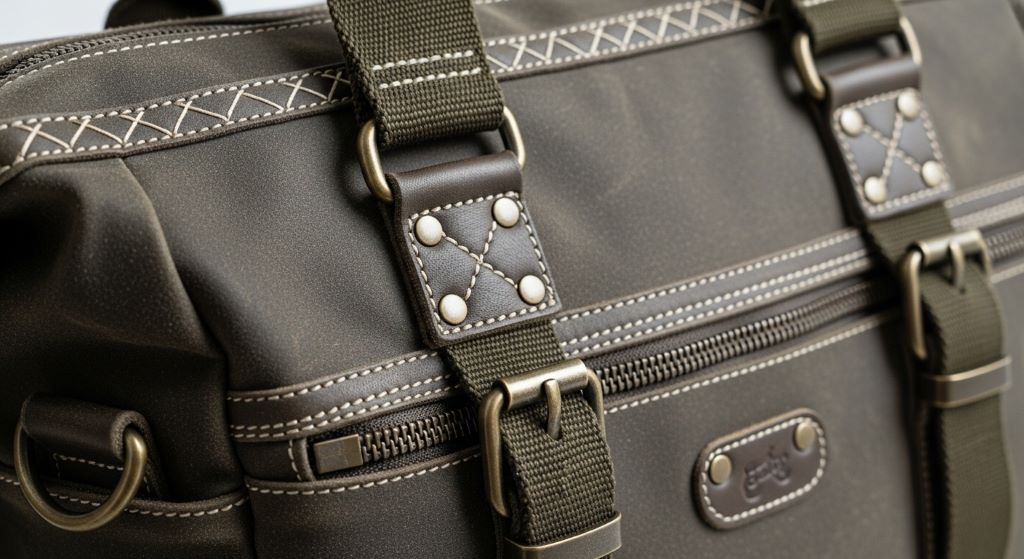
Look for tight, even stitches with no loose threads. A good stitch count is around eight to ten stitches per inch. Anything lower may loosen with regular use. Double or triple stitching at stress points — like the base of handles and corners — is a strong indicator of quality construction.
Bar tacks are small, dense stitch clusters used to reinforce high-stress areas. If you see bar tacks at the handle attachment points, that is a very good sign. They prevent handles from ripping out even when the bag is fully loaded.
Handles and Straps: The Parts You Rely On Most
Handles and straps take enormous strain during travel. They carry the weight of everything in the bag. Consequently, their construction is just as important as the bag’s fabric.
Evaluating Handle Quality
Look for wide, padded handles. Wider handles distribute weight more comfortably across your hand. Padding reduces fatigue, especially when the bag is heavy. Thin, unpadded handles dig into your skin and tend to wear through faster.
Check how the handles attach to the bag. Rivets combined with stitching create the strongest connection. Stitching alone can work, but only if it is reinforced thoroughly. Avoid bags where the handles are attached by a single, thin seam with no additional support.
Many travel totes also include a detachable shoulder strap. This adds versatility. However, pay attention to the hardware connecting the strap to the bag. Metal hardware is far more durable than plastic clips, which can crack under load.
Zippers, Clasps, and Closures: Small Parts, Big Impact
A broken zipper can render an entire bag useless. Yet closures are often the last thing shoppers check before buying.
Signs of a Quality Zipper
Look for zippers made by reputable brands like YKK. These zippers are smooth, consistent, and long-lasting. Avoid cheap, nameless zippers that feel rough or stiff right out of the box. If a zipper is hard to operate when the bag is new, it will only get worse with time.
The zipper pull should be large enough to grip easily. Additionally, it should be attached firmly with no wobble. A loose zipper pull is an early sign of poor quality.
Magnetic clasps and snap closures should feel strong and positive when engaged. They should not pop open accidentally. Weak clasps are both inconvenient and unreliable for travel.
Size, Structure, and Interior Organization
Durability is not just about how long a bag lasts. It is also about how well the bag holds its shape and functions over time.
Why Structure Matters
A bag with a sturdy base keeps its shape even when it is not fully packed. Look for reinforced bases made from thick board or molded plastic. These prevent the bag from collapsing and protect the bottom from wear when you set it down.
Interior organization also plays a role in longevity. Pockets, dividers, and loops help distribute the contents evenly. An evenly loaded bag puts less strain on any single point, which extends the overall life of the bag.
Spotting a Heavy-Duty Bag: What the Label Should Tell You
Manufacturers who invest in quality are usually proud to say so. A heavy-duty bag made for travel will often list its fabric weight, denier rating, and any certifications it has received.
Look for phrases like “reinforced stitching,” “double-layered base,” or “abrasion resistant.” These terms indicate that the manufacturer has addressed the areas where bags most commonly fail. Additionally, check whether the bag comes with a warranty. A warranty of one year or more signals that the brand stands behind its product.
Be cautious of vague descriptions like “premium quality” or “extra durable” without any supporting details. Genuine quality is specific and measurable.
Testing a Bag Before You Commit
Whenever possible, examine a bag in person before buying. Run your hand along the seams and feel for evenness. Open and close the zipper several times. Tug gently on the handles to test the attachment points.
Fill the bag with a few heavy items and carry it around for a moment. Pay attention to how the handles feel and whether the base holds its shape. A quick physical test tells you far more than a product photo ever could.
If you are shopping online, read the reviews carefully. Look for feedback from people who have used the bag for more than six months. Long-term reviews reveal problems that new buyers may not notice right away.
Brands and Price Points Worth Considering
You do not have to spend a fortune to get a quality bag. However, there is usually a clear difference in build quality between budget and mid-range options. Brands like Longchamp, Tumi, Lands’ End, and Lo & Sons have built strong reputations for producing travel totes that hold up over many years of use.
Furthermore, many outdoor and athletic brands produce excellent travel bags. Companies that make hiking and camping gear often apply the same construction standards to their everyday bags. Therefore, exploring outdoor brands is a worthwhile strategy when searching for durability.
How to Care for Your Travel Tote to Maximize Its Life
Even the best bag benefits from proper care. Clean your bag regularly according to the manufacturer’s instructions. Most canvas and nylon bags can be wiped down with a damp cloth. Some are even machine washable on a gentle cycle.
Store your bag in a cool, dry place when not in use. Avoid leaving it in direct sunlight for long periods, as UV exposure can weaken fabric fibers over time. If your bag has a water-resistant coating, you can refresh it periodically with a spray-on waterproofing product. This helps maintain the protection as the original coating gradually wears down.
Conclusion
Finding a travel tote bag that lasts for years is entirely possible when you know what to look for. Start with strong, high-quality fabric and pay close attention to stitching at the seams and handle attachment points. Choose a water-resistant tote if you travel frequently or live in a rainy climate. Look for metal hardware, quality zippers, and a reinforced base. Buy from brands that offer warranties and provide specific details about their materials.
A heavy-duty bag built with care and maintained properly can serve you on countless trips over many years. Take your time, do your research, and invest in a bag that earns its place in your travel routine.
Frequently Asked Questions
What is the most durable fabric for a travel tote bag?
High-denier nylon and heavy canvas are the most durable options. Look for 600D nylon or higher for the best combination of strength and weight.
How can I tell if a tote bag is truly water-resistant?
Check for a coated or laminated interior lining. The coating should feel even and cover the seams. Some manufacturers also list a water-resistance rating or treatment on the product label.
Are expensive travel totes always better quality?
Not always, but higher prices often reflect better materials and construction. Focus on specific features like denier rating, stitching quality, and warranty coverage rather than price alone.
How do I clean a canvas travel tote without damaging it?
Wipe the exterior with a damp cloth and mild soap. For deeper cleaning, hand wash in cool water and let it air dry. Avoid machine washing unless the manufacturer specifically allows it.
How often should I replace a travel tote bag?
A well-made bag maintained properly can last five to ten years or longer. Replace it when seams begin to separate, the base loses its structure, or the zipper no longer functions reliably.
Related Topics:
Where to Buy the Best Utility Knife in Childersburg, Alabama (AL): A Complete Guide for Homeowners, DIYers & Pros
How to Choose the Best Affordable Luggage Bag for Budget Travel in 2026
No Comments