

21 Dec Travel Risks of Carrying Unlabeled Medication
Traveling with medication is common for millions of people worldwide. However, carrying unlabeled medication can create serious problems at borders, airports, and customs checkpoints. Understanding these risks helps you prepare properly and avoid complications during your journey.
Why Medication Labels Matter When You Travel
Prescription bottles and packages come with labels for important reasons. These labels identify the drug name, dosage, patient information, and prescribing doctor. When you travel internationally or domestically, customs officials and security personnel rely on these labels to verify that your medication is legitimate.
Additionally, labels help medical professionals assist you in emergencies. If you become ill or injured abroad, doctors need to know what medications you take. Without proper labels, they may struggle to provide appropriate care.
Legal Consequences of Unlabeled Medications
Many countries have strict laws about importing medications. Carrying unlabeled pills or liquids can trigger serious legal issues. Customs officers may confiscate your medication if they cannot verify its contents. In some cases, travelers face detention or questioning for several hours.
Furthermore, certain medications that are legal in your home country may be controlled or banned elsewhere. Without proper labeling, you cannot prove the medication’s legitimacy. This situation becomes especially problematic with pain medications, sleep aids, or anxiety treatments.
Countries like the United Arab Emirates, Japan, and Singapore maintain particularly strict medication policies. Therefore, travelers must research destination-specific requirements before packing any pharmaceuticals.
Security Screening Challenges at Airports
Airport security personnel examine medications during screening processes. The Transportation Security Administration (TSA) in the United States allows medications in carry-on bags. However, they recommend keeping medicines in their original labeled containers.
When medications lack labels, security officers may request additional screening. This process delays your journey and creates unnecessary stress. Moreover, officers might refuse to allow unlabeled substances through security checkpoints altogether.
Liquid medications require special attention. TSA permits larger quantities than the standard 3.4-ounce rule for liquids. Nevertheless, you must declare these items and present them in properly labeled containers. According to TSA guidelines, travelers should inform officers about their medications before screening begins.
Health Risks of Medication Mix-Ups
Unlabeled medication containers create opportunities for dangerous mistakes. When pills look similar, you might accidentally take the wrong medicine. This error can cause severe health complications or reduce the effectiveness of your treatment.
Additionally, mixing up dosages becomes easier without clear labels. Taking too much or too little medication disrupts your health management. Travelers dealing with multiple prescriptions face even greater risks without proper identification.
Emergency situations compound these problems. Paramedics or emergency room staff need immediate information about your current medications. Without labels, they cannot quickly assess potential drug interactions or allergies.
Insurance and Reimbursement Problems
Travel insurance policies often require proper documentation for medication-related claims. If you lose unlabeled medication during your trip, insurance companies may refuse reimbursement. They need proof of prescription and medication legitimacy.
Similarly, replacing lost medication abroad becomes difficult without original labels. Foreign pharmacies typically require prescriptions and proper identification of needed drugs. Without this information, you might spend significant time and money resolving the situation.

Best Practices for Traveling with Medication
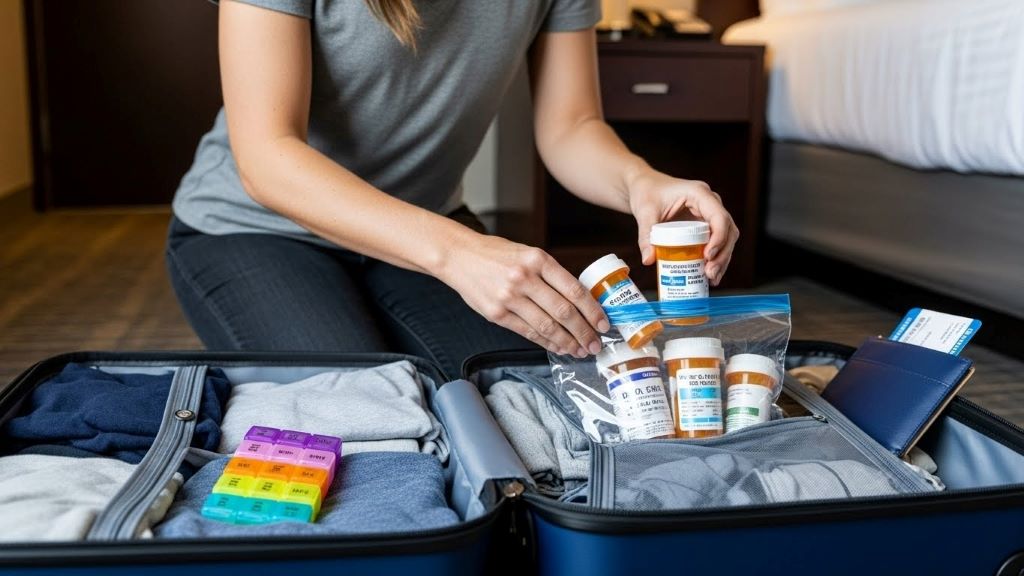
Always keep medications in their original prescription containers. These containers include all necessary identification information. If space is limited, photograph the labels before transferring pills to smaller containers.
Request a letter from your doctor listing all prescribed medications. This letter should include drug names, dosages, and the medical conditions being treated. Keep this document with your passport and travel papers.
Furthermore, research your destination’s medication policies before departure. The U.S. State Department provides country-specific information about medication restrictions and requirements. Some nations require advance approval for certain drugs.
Carrying Controlled Substances Across Borders
Controlled substances require extra documentation when crossing international borders. These medications include opioids, stimulants, and certain psychiatric drugs. Many countries limit or ban these substances entirely.
Therefore, travelers must obtain proper authorization before bringing controlled medications abroad. Contact the embassy or consulate of your destination country several weeks before travel. They can explain specific requirements and approval processes.
Additionally, carry copies of your prescriptions and doctor’s letters. Some countries require notarized statements or official translations. Preparing these documents in advance prevents problems at customs.
What Happens When Medication Gets Confiscated
If customs officials confiscate your medication, several outcomes are possible. In minor cases, they simply dispose of the unlabeled drugs and allow you to continue. However, more serious situations may involve questioning, fines, or detention.
Replacing confiscated medication in a foreign country creates additional challenges. You must locate a doctor, explain your medical needs, and obtain new prescriptions. This process takes time and may prove expensive without proper insurance coverage.
Moreover, some medications available in your home country may not exist abroad. Finding equivalent treatments requires medical consultation and potentially adjusting your health management plan.
Special Considerations for Different Types of Medication
Liquid medications need transparent labeling for security screening. Injectable drugs like insulin require proper documentation explaining medical necessity. Keep syringes with their original packaging to demonstrate legitimate medical use.
Similarly, cannabis-based medications create complex situations. Even in locations where cannabis is legal, crossing international borders with these products remains prohibited. Federal laws supersede state regulations when traveling between countries.
Over-the-counter medications also benefit from clear labeling. While these drugs face fewer restrictions, proper identification helps customs officials process them quickly.
Technology Solutions for Medication Management
Several smartphone apps help travelers track their medications. These applications store prescription information, medication schedules, and doctor contact details. However, they should supplement rather than replace physical labels and documentation.
Additionally, consider photographing all medication labels before travel. Store these images in cloud storage for easy access. This backup proves helpful if original containers get lost or damaged.
Preparing for Extended International Travel
Long-term travelers need additional medication planning. Ensure you have sufficient supplies for your entire journey. Running out of essential medication in foreign countries creates serious health risks.
Furthermore, establish relationships with international pharmacies or medical providers. Some countries allow prescription transfers or temporary medication access for travelers. Research these options before departure to ensure continuity of care.
Conclusion
Traveling with unlabeled medication exposes you to legal troubles, health risks, and unnecessary complications. Keeping medicines in original labeled containers protects your health and simplifies border crossings. Taking time to prepare proper documentation, research destination requirements, and organize your medications ensures safer, smoother travel experiences. Always prioritize proper labeling and documentation to avoid problems that could derail your journey or compromise your health.
Frequently Asked Questions
Can I transfer my medication to a pill organizer when traveling?
While pill organizers are convenient, you should keep original labeled bottles accessible during travel. Carry the organizer for daily use but pack original containers in your luggage for security screening and customs verification.
What should I do if I lose my medication labels during a trip?
Contact your prescribing doctor immediately to request documentation. They can fax or email prescription information to you. Additionally, contact your pharmacy for label replacement or verification letters that identify your medications.
Do over-the-counter medications need labels when traveling internationally?
Yes, keeping over-the-counter medications in original packaging helps customs officials identify them quickly. This practice prevents delays and questions during security screening processes.
How can I find out if my medication is legal in my destination country?
Contact the embassy or consulate of your destination country before travel. They provide specific information about medication restrictions, banned substances, and required documentation for prescription drugs.
What happens if airport security questions my medication?
Security officers may request additional screening or verification of your medications. Having proper labels, prescriptions, and doctor’s letters helps resolve these situations quickly and allows you to continue your journey.
Related Topics:
Top Safety Tips for Solo Female Travelers in Morocco
Do You Need a Passport to Travel to Hawaii?
No Comments